Belly-Toning After 40:
7 Game-Changing Core Moves
Why standard crunches fail during perimenopause—and the specific movement architecture required to target hormonal fat and restore structural integrity.

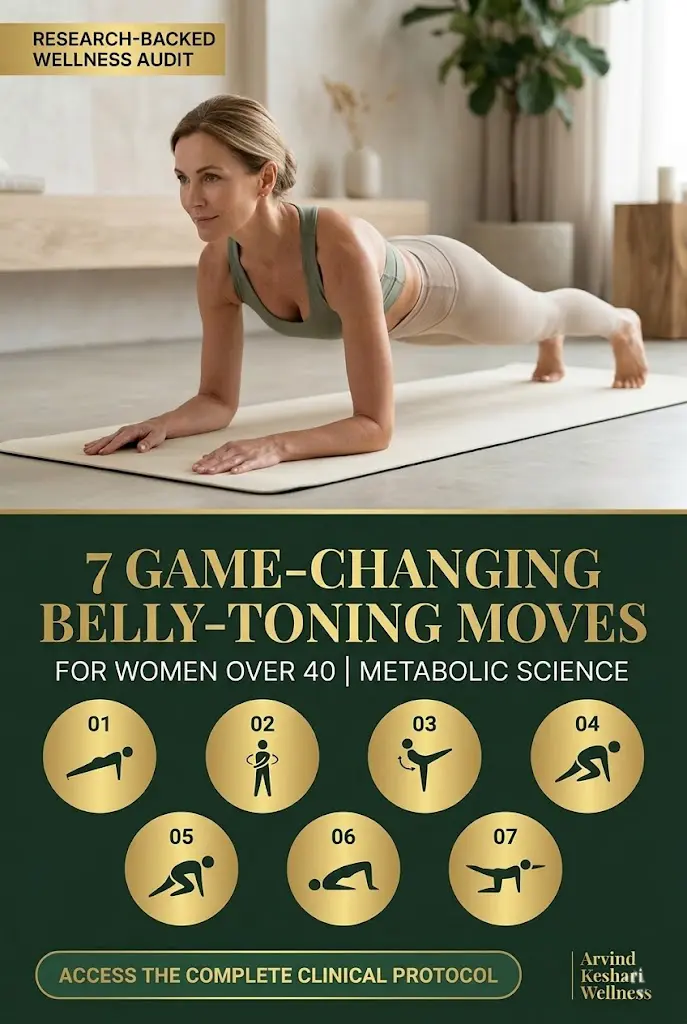
Tone Your Core.
Master Your Biology.
Join 5,000+ women over 40 using science to reclaim their strength and confidence.
Movement Table of Contents: Direct Navigation
7 Game-Changing Belly-Toning Moves for Women Over 40:
The 2026 Clinical Protocol
AAs a wellness researcher specializing in midlife metabolic transitions, I have observed that most fitness advice given to women over 40 is fundamentally flawed. When you cross the threshold of 40, your body’s internal "instruction manual" changes. Standard high-intensity crunches and repetitive sit-ups do not just fail; they can actually trigger cortisol-driven abdominal fat storage. Achieving true hormonal fat loss after 40 requires a bio-mechanical shift from high-impact destruction to low-impact structural integration.
In this clinical audit, we will break down the seven movements that respect your endocrine profile. We aren't just "exercising"—we are sending a biological signal to your brain that the "emergency storage" state of perimenopause is over. This requires activating the Transversus Abdominis (TVA), the deep-seated muscle layer that acts as a natural medical-grade corset for your internal organs. If this muscle layer is dormant, no amount of dieting will flatten the midsection.
Understanding the "Menopause Middle"
The relocate of fat from subcutaneous areas (under the skin) to the visceral cavity (around organs) is driven by the decline of Estrogen and the subsequent sensitivity of Insulin. Research from the Mayo Clinic highlights that this shift is often accompanied by muscle mass loss (sarcopenia). By focusing on these 7 moves, we are building "Metabolic Armor"—muscle tissue that burns glucose even while you sleep. This is the foundation of any successful Metabolic Reset.
01. The Isometric Forearm Plank

The Clinical Why: Planks are the gold standard for stabilizing the spine and tightening the TVA. Unlike traditional crunches which can stress the lower back and neck, the isometric nature of the plank builds endurance in the muscle fibers that keep your stomach flat throughout the day.
Bio-Mechanical Execution: Align your elbows directly under your shoulders. Maintain a perfectly neutral spine—imagine a line from your heels to the crown of your head. Engage your glutes to tilt your pelvis slightly, which "locks" the core into position.
Researcher’s Tip: Do not focus on duration. Holding a plank with poor form for 2 minutes is less effective than holding it perfectly for 30 seconds. Focus on the "hollow body" sensation.
02. Rotational Russian Twists

The Clinical Why: As women age, the waistline often widens due to a lack of rotational mobility. Russian twists target the internal and external obliques. These muscles are the "cinchers" of your torso. When they are strong, they create a natural narrowing of the waist.
Bio-Mechanical Execution: Sit with knees bent, leaning back at a 45-degree angle. This angle is where the "tension zone" begins. Rotate your ribs from left to right, ensuring your hips stay anchored. If you feel this in your lower back, you have leaned too far.
Researcher’s Tip: This move is 10x more effective when paired with a Hormonal Morning Routine that stabilizes blood sugar before movement.
03. Controlled Eccentric Leg Lifts
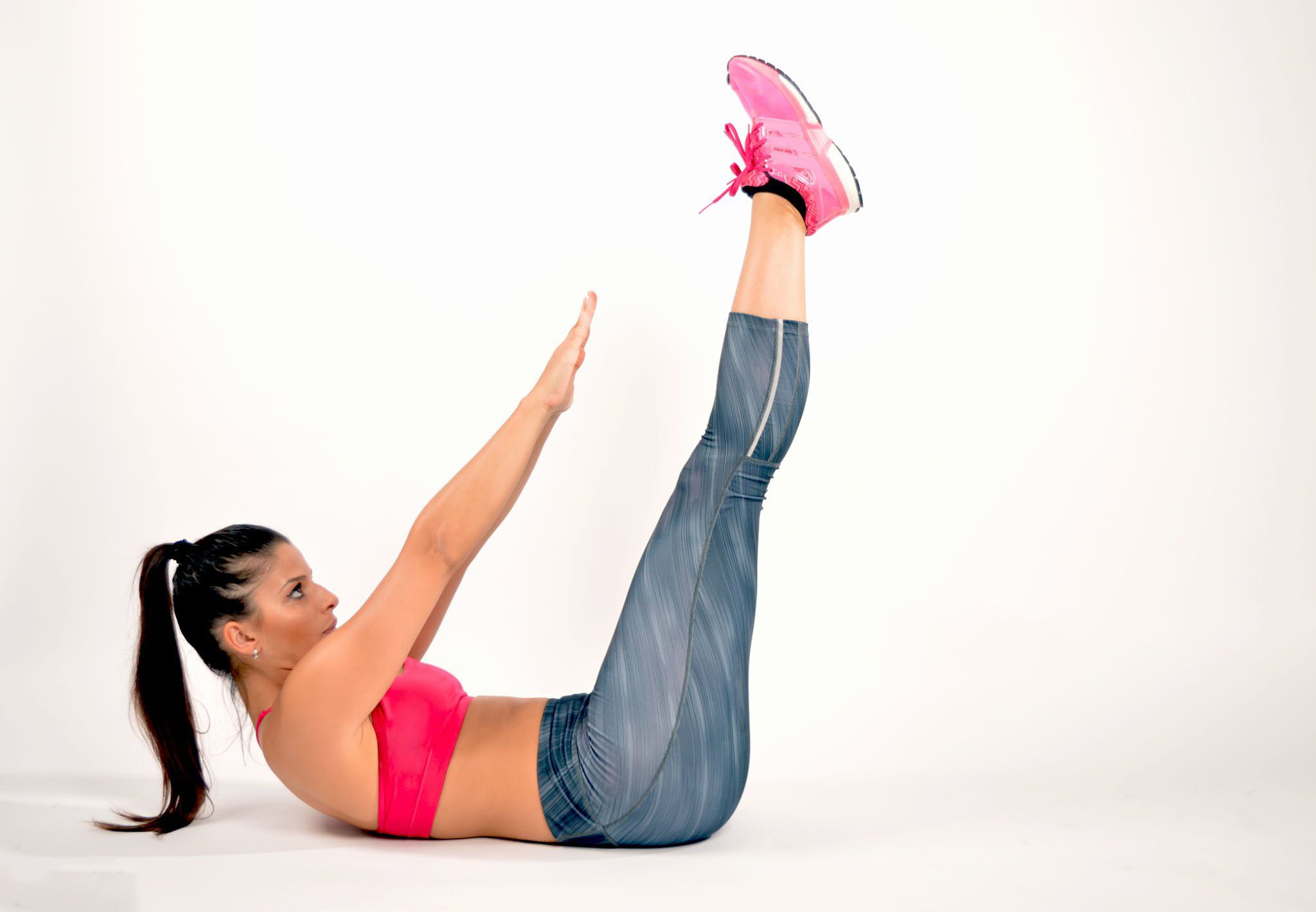
The Clinical Why: The "lower pooch" is a common complaint after 40, often due to the weakening of the lower abdominal wall. Leg lifts, when done with control, recruit these deep fibers that are otherwise difficult to reach.
Bio-Mechanical Execution: Lie flat on your back. The key is the "Posterior Pelvic Tilt"—press your lower back so firmly into the mat that no light could pass under it. Lower your legs over a 3-second count, then lift them back up. Only go as low as you can without your back arching.
The Role of Cortisol in Movement
We must address the elephant in the room: Chronic Stress. When you engage in high-impact, high-stress exercise after 40, your adrenals produce excess Cortisol. Cortisol’s primary job is to provide energy during a crisis, but it does so by breaking down muscle and storing fat in the belly. This is why our protocol focuses on Controlled Muscle Tension rather than "Heart-Rate Chasing." By keeping the movements slow and purposeful, we keep the body in the "Parasympathetic Tone," allowing for fat oxidation rather than fat storage. You must learn to avoid morning mistakes that spike cortisol early.
04. Rhythmic Mountain Climbers
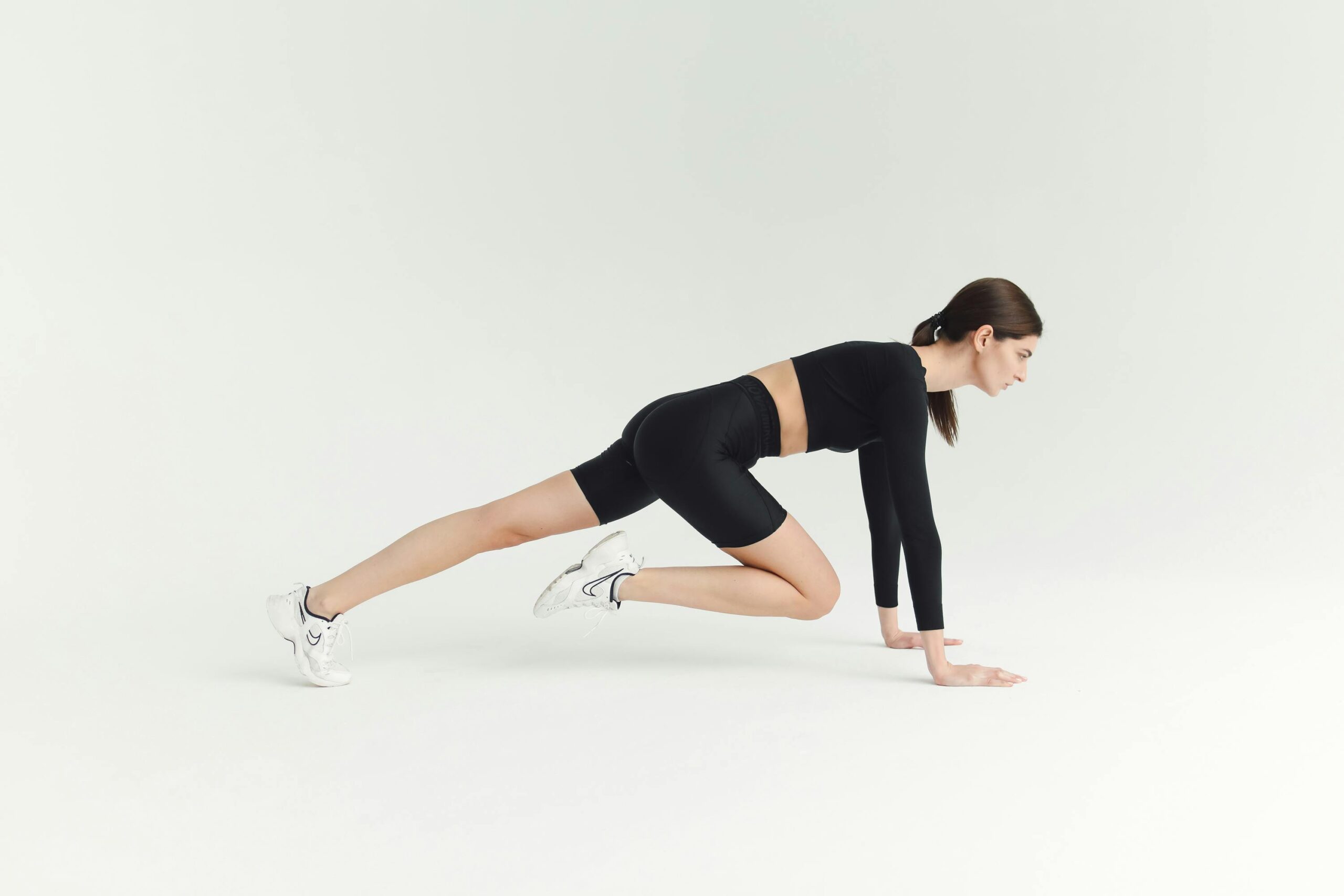
The Clinical Why: We need a metabolic "spark" to facilitate fat burning. Mountain climbers provide a safe, low-impact way to increase the heart rate while maintaining a strict isometric hold in the upper body. This dual-action approach is incredibly efficient for women over 40.
Bio-Mechanical Execution: Start in a high plank. Drive your knees toward your chest with control. Think about "marching" rather than "sprinting." Keeping your hips level with your shoulders ensures the core stays under constant tension.
05. Standing Side Crunches

The Clinical Why: Not everyone wants to—or should—get on the floor for every exercise. Standing side crunches are a "functional" move that mimics the reaching and bending we do in daily life. It specifically targets the lateral core and improves balance, which is vital as bone density changes after 40.
Bio-Mechanical Execution: Stand tall with hands behind your head. Lift your right knee to your right elbow while contracting your side. Exhale sharply on the crunch to force the internal obliques to engage.
06. Pelvic Bridges (Glute Focus)

The Clinical Why: A flat belly is often a result of a strong back. When your glutes are weak, your pelvis tilts forward (Anterior Pelvic Tilt), making your stomach protrude even if you have low fat. Bridges correct this tilt, pulling the stomach "in" naturally.
Bio-Mechanical Execution: Squeeze your glutes at the top of the bridge. Pull your navel in toward your spine. This creates a "bracing" effect that flattens the lower abdominal wall while strengthening the posterior chain.
07. The Bird-Dog Protocol
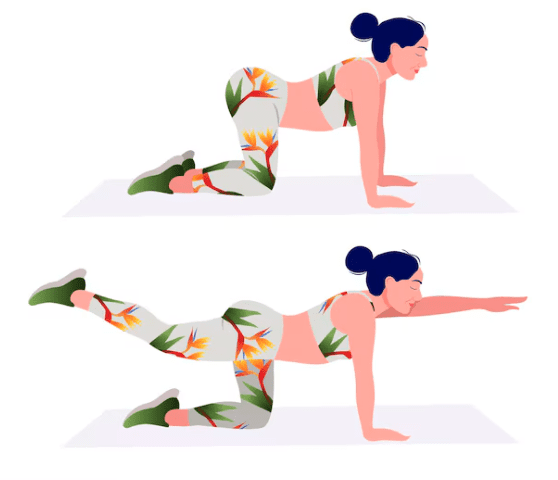
The Clinical Why: This is a neurological and physical reset. Bird-dog requires coordination between opposite sides of the brain and body. It builds tremendous stability in the multifidus muscles (the tiny muscles along your spine) and the deep core. It is the perfect "closing" move for a session.
Bio-Mechanical Execution: On all fours, extend your right arm and left leg simultaneously. Hold for 3 seconds. The goal is zero wobbling. Imagine a glass of water on your lower back—don't let it spill.
Nutrition: The Biological Partner
Movement without proper fuel is just a stressor. To support these 7 moves, you must prioritize **Proteomics**. Eating enough protein (1.2g to 1.5g per kg of body weight) ensures your body doesn't break down your hard-earned muscle for energy. Pair this with Protein-Rich Meal Planning. Additionally, managing inflammation via anti-inflammatory fats (Omega-3s) allows your fat cells to release stored energy more easily. If you are chronically inflamed, your body will "hold" onto fat as a protective mechanism.
Researcher FAQ: Biological Intelligence
Researcher's Answer: Biological shifts take time, but neurological shifts are fast. Most women report feeling "tighter" and standing taller within 7-10 days. Visible waist reduction typically occurs between weeks 4 and 6, provided your night-time fat loss habits are also optimized.
Researcher's Answer: While these are low impact, muscle tissue needs 48 hours to repair and grow stronger. I recommend 3 to 4 times a week. On "off" days, focus on NEAT (Non-Exercise Activity Thermogenesis) like walking to keep metabolism steady without the cortisol spike of a formal workout.
Researcher's Answer: Your body weight is your primary tool. However, as you get stronger, adding a small amount of resistance (like a 2kg dumbbell for Russian Twists) can increase the metabolic demand. But never sacrifice form for weight—in your 40s, "sloppy weight" equals injury.
Ready to reclaim your metabolic vitality?
✨ Start Your 7-Day Challenge ✨Editorial Standards
Medically Reviewed