How to Lose Hormonal Belly Fat After 40: The Ultimate Proven 2026 Reset
Why "eat less, move more" stops working during perimenopause—and the specific biological key to unlocking your metabolism.
By Arvind Keshari

Arvind Keshari
Specializing in metabolic health and hormonal balance for women entering their prime years.
The Sunday Reset
Join our curated circle of women redefining life after 40. Receive one science-backed strategy every week. No clutter, just clarity.
Download 7-Day Challenge (Free)How to Lose Hormonal Belly Fat After 40: The Ultimate Proven 2026 Reset
Why "eat less, move more" stops working after 40—and the specific biological key to unlocking your metabolism.
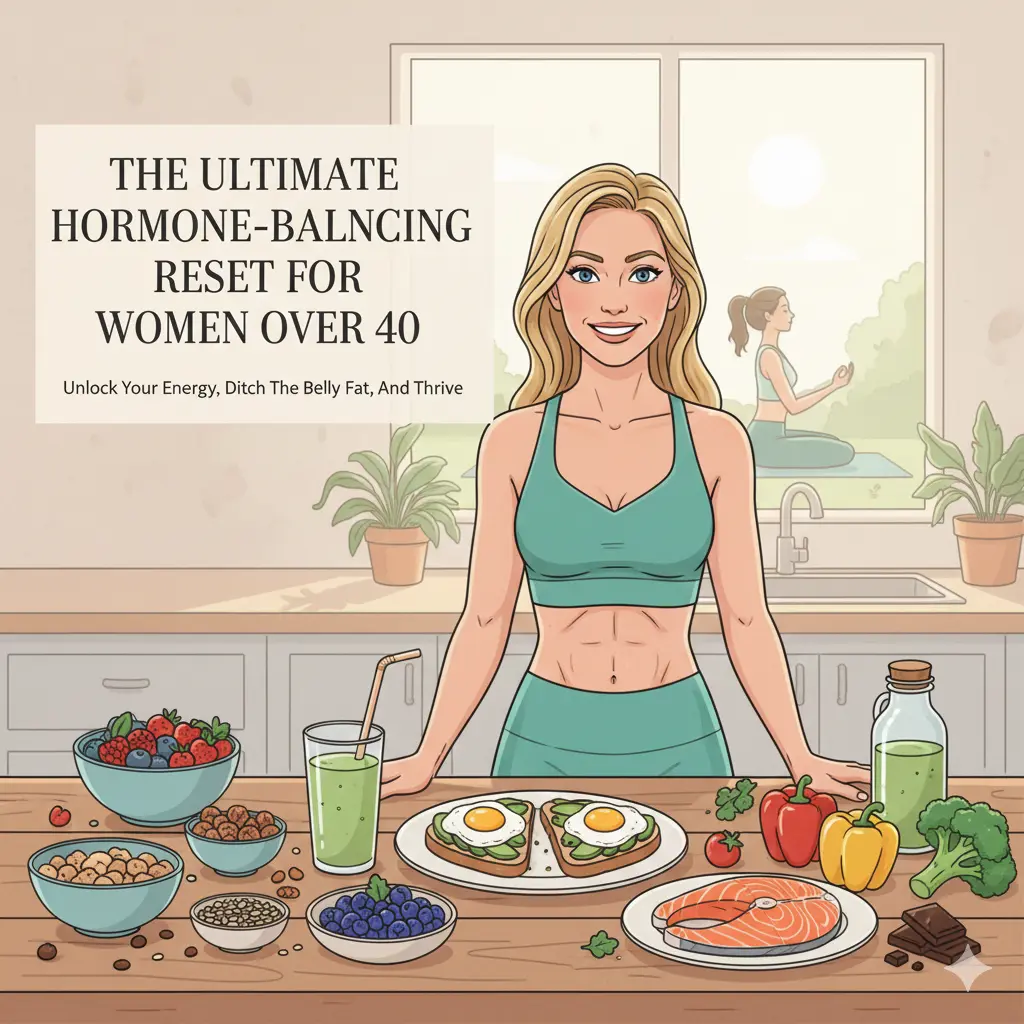
If you have spent the last few years feeling like a stranger in your own body, you are not alone. Millions of women over 40 report the same phenomenon: despite eating the same foods and doing the same workouts that used to keep them slim, they suddenly develop a stubborn layer of fat around the midsection. This is not a failure of willpower. It is a biological shift.
To effectively lose hormonal belly fat, we must stop treating the symptom (weight) and start treating the cause (hormones). The operating system of your body has changed. This guide, based on our 52-article research series at Flat Belly For Women Over 40, provides the comprehensive roadmap to reversing this process naturally, backed by clinical data from institutions like The Mayo Clinic.
1. The Science: Why the "Meno-Belly" Actually Happens
The term "middle-age spread" is often used casually, but medically, it refers to a redistribution of adipose tissue. In your 20s and 30s, estrogen encourages your body to store fat in the hips and thighs (subcutaneous fat). This fat is relatively harmless. However, as perimenopause begins and estrogen levels decline, this protective mechanism fades.
According to Harvard Health Publishing, without sufficient estrogen, your body shifts fat storage to the abdominal cavity. This new fat is called Visceral Fat. Unlike the pinchable fat under your skin, visceral fat wraps around your liver, pancreas, and intestines. As we explored in our deep-dive on Menopause and Fat Distribution, this fat is metabolically active, secreting inflammatory proteins called cytokines that disrupt your insulin signals.
2. Insulin Resistance: The Silent Metabolic Block
To lose hormonal belly fat, you must understand Insulin. After 40, due to natural muscle loss (sarcopenia), your cells can become "resistant" to insulin. Research published in the National Institutes of Health (NIH) confirms that post-menopausal women are at significantly higher risk for insulin resistance, even with a normal BMI.
When your cells resist insulin, your blood sugar stays high. Your pancreas responds by flooding your system with even more insulin. Insulin is a fat-storage hormone. When insulin levels are high, it is biologically impossible for your body to burn fat. Our 7-Day High-Protein Meal Plan helps repair this mechanism by focusing on low-glycemic foods that keep insulin quiet.
3. Cortisol: The "Stress Belly" Phenomenon
You cannot talk about belly fat after 40 without talking about stress. Women in this demographic are often the "sandwich generation," caring for aging parents and growing children. This chronic stress keeps your cortisol levels permanently elevated.
When cortisol spikes, it signals your liver to dump glucose into your bloodstream. Since you aren't fighting a physical threat, this excess sugar is converted into belly fat. As noted by WebMD Medical Reference, managing stress is a weight loss necessity, not just a lifestyle choice. Learn more in our guide on natural anxiety reduction.
4. The Thyroid Connection: Your Metabolic Thermostat
Often overlooked is the thyroid gland. As we age, thyroid function naturally slows down. A study in the Journal of Clinical Endocrinology & Metabolism suggests that even subclinical hypothyroidism can lower your Basal Metabolic Rate (BMR) by up to 15%.
Furthermore, high cortisol blocks the conversion of T4 (inactive hormone) into T3 (active hormone). This metabolic double-whammy leaves you feeling tired and puffy. Supporting your thyroid with Selenium and Zinc is critical. We cover the best sources in our 2026 Supplement Guide.
5. The Estrobolome: Your Gut's Role in Weight
New research points to the "Estrobolome"—a specific set of bacteria in your gut that metabolize estrogen. If your gut health is poor, these bacteria cannot excrete used estrogen, leading to "Estrogen Dominance."
This promotes water retention and fat storage. To fix this, you must feed your gut microbiome with prebiotic fibers. Learn exactly what to eat in our 7 Flat Belly Foods Guide.
6. The "Wine Belly" Truth: Alcohol & Liver Function
It is a hard truth to swallow, but that nightly glass of wine might be the single biggest obstacle to your ability to lose hormonal belly fat. Here is the biology: Your liver is your primary fat-burning organ, but it is also responsible for detoxifying alcohol.
When you drink alcohol, your liver pauses all other metabolic processes—including fat burning—to process the toxin (ethanol). If you have elevated estrogen levels, your liver is already overworked trying to clear excess hormones. Adding alcohol to the mix creates a metabolic traffic jam. We aren't saying you can never have a drink, but for the first 30 days of this reset, we recommend swapping alcohol for magnesium mocktails to let your liver recover. Read about our 7-Day Detox Cleanse for liver support strategies.
7. Circadian Fasting: The 12:12 Method
Intermittent fasting is popular, but aggressive fasting (like 16:8 or OMAD) can actually backfire for women over 40 by spiking cortisol. Instead, we recommend "Circadian Fasting" or the 12:12 method.
This simply means you eat within a 12-hour window (e.g., 7 AM to 7 PM) and rest your digestion for the other 12 hours. This gentle approach gives your body enough time to lower insulin levels and enter "repair mode" without triggering a stress response. It aligns perfectly with your natural sleep-wake cycles, improving both digestion and sleep quality.
8. Strategic Nutrition: The 30g Protein Rule
The most effective nutritional strategy to lose hormonal belly fat is Protein Pacing. This involves consuming 30 grams of high-quality protein within 60 minutes of waking up. Clinical trials have shown that higher protein intake in older women preserves lean muscle mass, which drives metabolism.
- Satiety: Suppresses hunger hormones.
- Thermogenesis: Burns more calories during digestion.
- Muscle Protection: Prevents metabolic slowdown.
Pair this with recipes from our Morning Metabolism Booster.
9. Sleep Architecture: Burning Fat While You Dream
If you are sleeping less than 7 hours a night, you are chemically preventing fat loss. According to the Sleep Foundation, sleep deprivation spikes ghrelin (hunger) and suppresses leptin (fullness). Most fat-burning Growth Hormone is released during deep sleep (11 PM - 2 AM).
To optimize this, we recommend a "digital sunset" by 8 PM. Read our full protocol in 7 Night Habits to Melt Fat.
Your 30-Day Transition Roadmap
| Week | Focus Area | Action Step |
|---|---|---|
| Week 1 | Blood Sugar | Eat 30g protein at breakfast. No carbs after 7 PM. |
| Week 2 | Movement | Walk for 10 minutes after lunch and dinner. |
| Week 3 | Cortisol | Magnesium Glycinate before bed + 5 min breathing. |
| Week 4 | Metabolism | Add resistance training 2x per week. |
Your 24-Hour Hormone Reset Schedule
If you are feeling overwhelmed, just focus on this simple daily rhythm. This schedule is designed to optimize your cortisol and insulin curves naturally.
- 🌅 7:00 AM - The Protein Anchor: Drink 16oz of water and eat 30g of protein (e.g., 3 eggs or Greek Yogurt) within an hour of waking.
- 🥗 1:00 PM - The Fiber Fill: A large salad with leafy greens and olive oil to support liver detoxification.
- 🚶♀️ 7:00 PM - The Insulin Walk: Finish dinner and immediately go for a 10-minute gentle walk to lower blood sugar.
- 😴 9:30 PM - The Digital Sunset: Phone screens off, Magnesium supplement taken, and lights dimmed to boost melatonin.
Frequently Asked Questions
It is a perfect storm of dropping estrogen, rising cortisol, and insulin resistance. As stated by Mayo Clinic experts, this shift requires a hormonal approach, not just calorie counting.
Not necessarily. Strict Keto can sometimes stress the adrenal glands in women over 40. A moderate-carb approach focused on complex fibers is often more sustainable.
We recommend a "Core Three" approach: Magnesium Glycinate for sleep/stress, Vitamin D3/K2 for hormones, and Omega-3s for inflammation.
Ready to Reset Your Metabolism?
Download your 30-Day Belly Reset Challenge for Women Over 40. Includes exclusive researcher-backed instructions, a daily metabolic tracking sheet, and a hormone-safe grocery checklist.
Your 40s are the start of your strongest chapter! 💪
Curated Essential Readings
Accelerate your hormonal reset by combining today's insights with these complementary protocols from our archive.